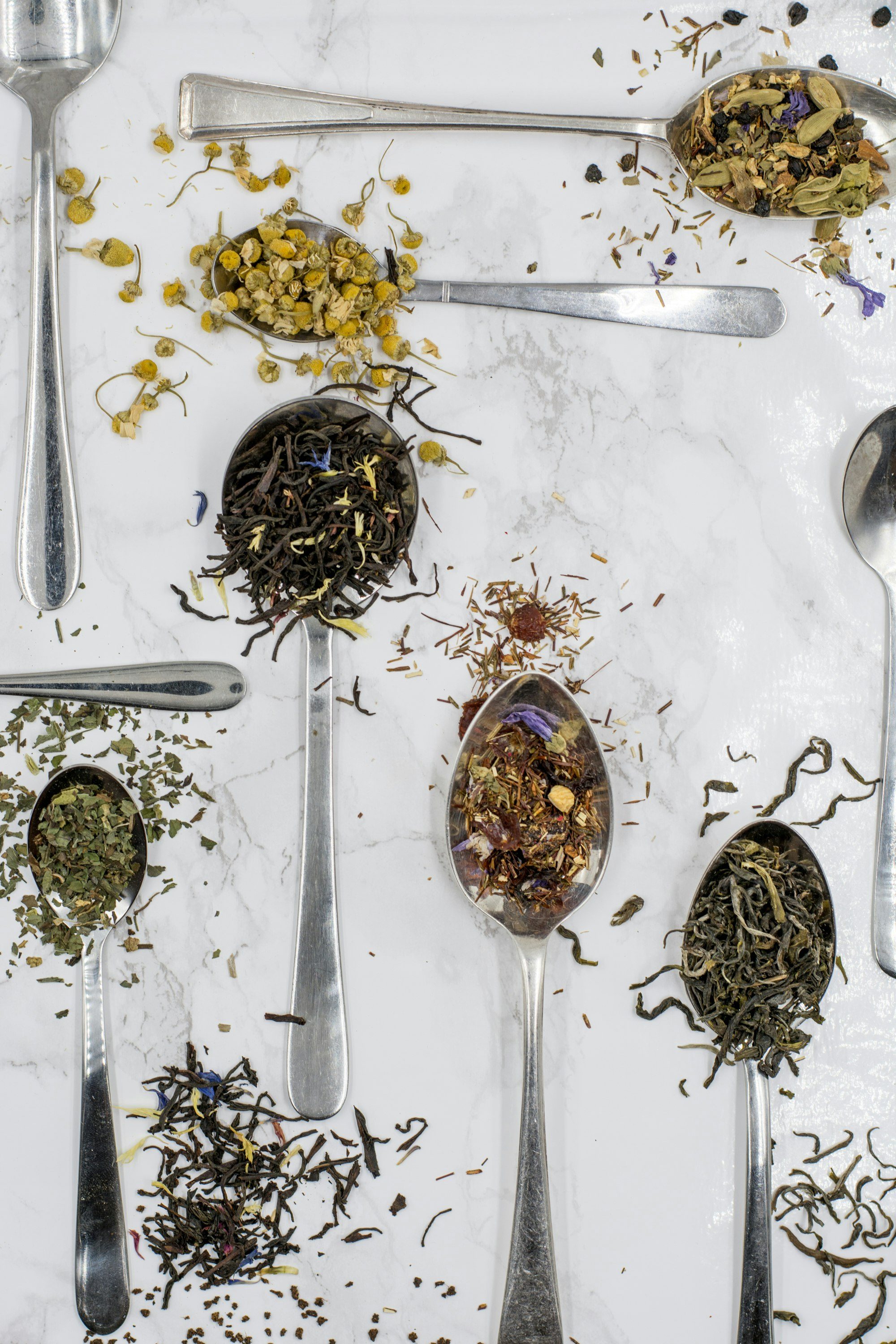
Each of the five services can be engaged on its own, or combined into a full incubation programme. Most clients start with the second — and leave with the first and fifth as well.
Local ingredient curation & sourcing
We visit smallholder growing regions and herbal material channels to find ingredients with a genuine origin story, full traceability and reliable supply.
Feasibility and seasonality assessment
Contract farming and surplus-grade planning
Origin story material development
Best for: smallholder farms, startups
Formulation & format conversion
Exclusive low-additive herbal extraction turns hard-to-take traditional formulas into something modern consumers will take every day.
Custom herbal and tonic tea bags
Concentrates, instant powders, gummies
Flavour and functionality balancing
Deliverables: samples + formulation spec
GHP-compliant manufacturing & QC
Production is supervised by certified food technologists under GHP, with critical control points defined through systematic hazard analysis.
Incoming material inspection
Process control and batch traceability
Finished-product test specifications
Overseen by: certified food technologists
Labelling, claims & regulatory review
We review labelling and advertising language at the formulation stage, so "what you cannot say" is known upfront — not discovered during an inspection.
Nutrition labelling and ingredient ordering
Advertising claim risk review
Preliminary export market assessment
Value: lower delisting and penalty risk
Subsidy facilitation & brand value-adding
We map the government funding routes worth pursuing and pair them with packaging and channel guidance, so early budget goes where it counts.
Startup and R&D funding route mapping
Technical feasibility documentation
Packaging specs and channel advice
Note: not a grant agency; no guarantee of approval
Integrated incubation programme
All five services under one team — from market positioning and ingredients through to launch cadence — so nothing is lost in handover.
Single point of project management
Stage gates and defined stop-loss points
Post-launch formulation iteration
Best for: first-time product developers
Why Different
Conventional contract manufacturer vs. Pao Can incubation
The difference isn't the equipment. It's who carries the judgement calls. Below is the same work, done two ways.
Engagement comparison: conventional OEM versus the Pao Can incubation model
Stage
Conventional OEM
Pao Can incubation
Ingredient sourcing
Client-supplied, or generic commodity materials
Actively curated smallholder and herbal materials with origin stories
Role in formulation
Builds to order; formulation risk sits with the client
Co-development, starting with feasibility and flavour–function balancing
Regulatory & labelling
Non-compliant claims found pre-launch; artwork reprinted
Certified technologists review labelling and claims at formulation stage
Pilot runs
High MOQ; new brands bet the entire budget at once
Small pilot runs can be discussed: validate, then scale
Development capital
Out of scope; client arranges funding alone
Funding routes mapped, with technical evidence provided
After launch
Delivery closes the project
Formulation iteration and line extension based on market feedback
Note: the left column describes patterns commonly seen in the industry and does not refer to any specific company. Actual terms are determined per project.
FAQ
The five things clients hesitate over
All of these have been asked before. The answers are here so you don't need to book a meeting just to ask one question.
MOQ varies significantly by format; tea bags generally have a lower threshold than concentrates and gummies. We understand new brands need to validate the market first, so a small pilot run for channel testing can be discussed before scaling up. Actual quantities are assessed during consultation based on formulation and packaging.
Projects adapting an existing format can usually be sampled within a few weeks. Fully new formulation development, ingredient sourcing and packaging tooling take longer — typically three to six months. The biggest variables are how quickly the formula is finalised, ingredient seasonality and testing schedules; we set all three out before the project starts.
Formulas and brand assets you supply remain yours. For formulations developed with Pao Can Biomedical, ownership is stated explicitly in the contract, and exclusivity terms can be negotiated according to the engagement model. We can sign an NDA before any formulation detail is discussed.
We help map suitable startup, R&D and agricultural value-adding funding routes, and provide supporting evidence on technical and manufacturing feasibility. To be honest with you: we are not a grant agency and cannot guarantee approval. How drafting and submission are divided, and any related fees, are set out after consultation based on scope.
Foods may not claim medical efficacy, and health claims are strictly regulated. Our certified food technologists review labelling and advertising language at the formulation stage so your product value is expressed lawfully. Final labelling responsibility remains with the brand owner under the Act Governing Food Safety and Sanitation. That is a line we state plainly rather than blur to win the order.
Free Consultation
One consultation, one honest feasibility read
No business plan required. Bring your ingredients, budget and timeline, and we'll ask the questions that need asking.